Manka Restaurant

Monday: 11:30 a.m.–2:30 p.m., 6:30 p.m.–10:30 p.m.
Tuesday: 11:30 a.m.–2:30 p.m., 6:30 p.m.–10:30 p.m.
Wednesday: 11:30 a.m.–2:30 p.m., 6:30 p.m.–10:30 p.m.
Thursday: 11:30 a.m.–2:30 p.m., 6:30 p.m.–10:30 p.m.
Friday: 11:30 a.m.–2:30 p.m., 6:30 p.m.–10:30 p.m.
Saturday: 11:30 a.m.–11:30 p.m.
Sunday: Closed

Latin American fusion cuisine

In Mulhouse, a city that is constantly reinventing its culinary scene, one restaurant has stood out since January 2026 as one of the most unique in the Grand Est region.

Manka, located at 8 Rue Wilson, is not a restaurant like any other: it’s a sensory odyssey, an invitation to journey across two continents over the course of a meal.

A Birth at the Crossroads of Worlds

Sometimes it takes unlikely encounters for something truly essential to emerge. Nikkei cuisine—the art of fusing Japanese and Peruvian culinary traditions—is precisely the result of such an encounter: that of two civilizations that seemed destined never to cross paths.

It was at the end of the 19th century, when thousands of Japanese immigrants landed on the shores of Peru in search of a promised land, that one of the most fascinating chapters in the history of world gastronomy was written. From this coexistence emerged a fusion cuisine, where Japanese precision meets Andean generosity, where yuzu dialogues with aji amarillo, and where leche de tigre rivals ponzu in elegance.
A culinary philosophy... from Peru to Mulhouse

It is this culinary philosophy that Khaled Alloucha has chosen to bring to the banks of the Ill River by opening the Manka restaurant in the heart of Mulhouse. The restaurant, which he launched in January 2026, has set itself an ambitious goal: to offer, in Alsace, a gastronomic experience that no one expected here—far from the Michelin-starred restaurants of Paris and the global capitals of fusion cuisine.

A bold venture that reflects a deep conviction: contemporary gastronomy knows no geographical boundaries.

The setting for total immersion

Stepping through Manka’s doors means allowing yourself to be transported. The decor is designed for total immersion, offering what the founders themselves describe as “a natural setting that fosters a sense of escape.”

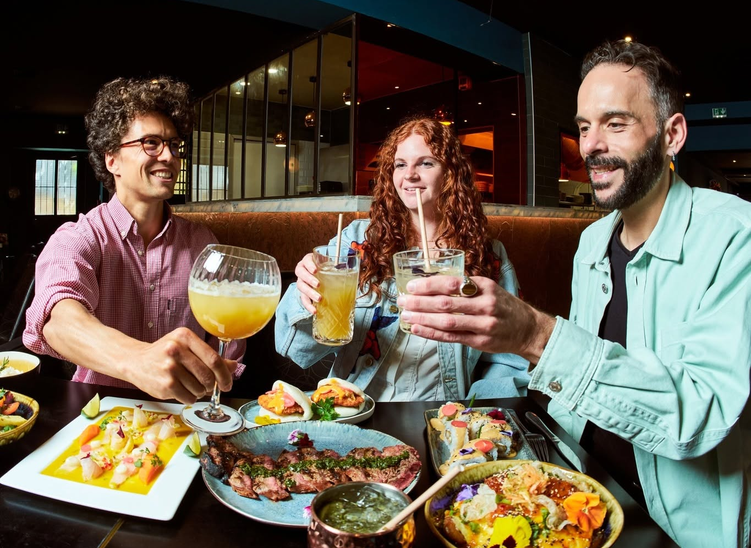
The experience—intended to be “gustatory, visual, olfactory, and auditory”—is enhanced by an exclusive musical selection that immerses diners in an atmosphere halfway between Lima, Tokyo, and the Caribbean.

The interior, meanwhile, blends these influences with confident elegance. It brings to mind the large immersive dining tables that have sprung up in Paris and Barcelona, but on a more intimate, human scale that better captures the spirit of Mulhouse.

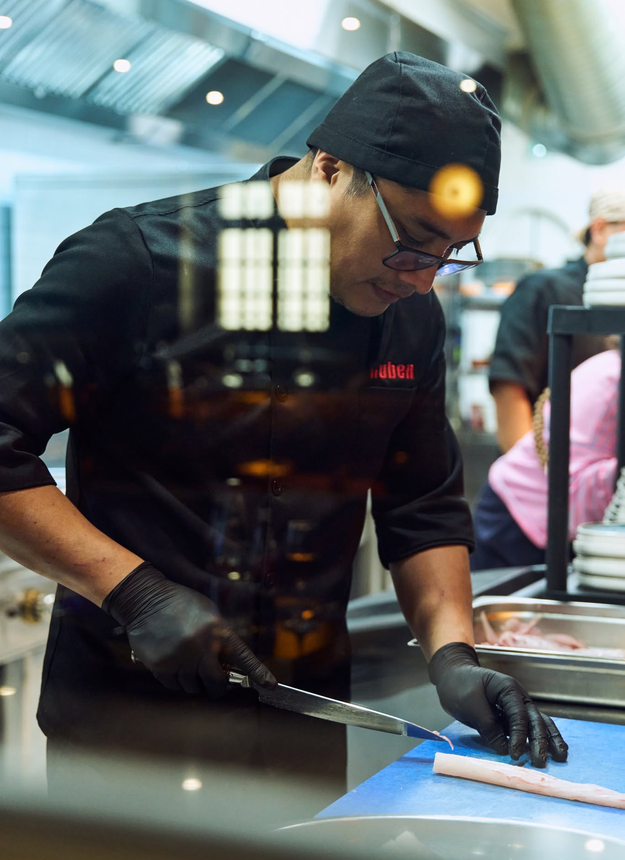
Here, there’s no gratuitous ostentation: every element of the decor is designed to serve the culinary narrative. The open kitchens remind us that cooking is a spectacle in itself—a living art form that’s as much a pleasure to watch as it is to taste.

A map between Lima and Tokyo

Manka’s menu is a journey in itself. The Manka rolls—creative variations on Japanese maki, reinterpreted with a Peruvian twist—are one of the restaurant’s signature dishes. The crudo y marinado evokes Lima’s tiraditos—slices of raw fish marinated in a tangy, spicy leche de tigre—which are related to ceviche but even closer to the precision of Japanese sashimi. Arroz misti, the mixed rice dish typical of Peruvian Nikkei cuisine, is a direct nod to chifa—those Sino-Peruvian restaurants that have so greatly influenced Lima’s gastronomy.

Grilled meats round out this picture with a touch of hearth and embers, rooted in Andean tradition. For Nikkei cuisine is not just about freshness and raw ingredients: it also knows how to harness fire, deep marinades, and slow fermentation. It is this duality—raw and cooked, sour and umami, Japanese lightness and Peruvian generosity—that makes every plate at Manka a mini-lesson in culinary geography.

Cocktails, Music, and South American Nights

As night falls, Manka reveals another facet of its personality. The cocktail menu unfolds like an atlas of the tropical Americas: pisco sours, Caribbean rums, and spirits from Venezuela, Brazil, Puerto Rico, and Jamaica come together in expertly shaken creations. You’re no longer quite in Mulhouse; you’re somewhere between Lima’s Miraflores and the bars along Havana’s Malecón.

The family-friendly aspect isn’t forgotten: every Sunday, Manka transforms into a “kid-friendly” spot, offering a generous buffet with Andean influences, along with children’s activities upstairs.

This versatility—a gourmet dining experience during the week, a family-friendly gathering on weekends, and a lively bar in the evening—says something essential about the concept: Manka is not an elitist destination. It’s a lively place, open to all appetites, all moods, and all times when the craving for good food strikes.

Khaled Allucha Brings Lima & Tokio to Alsace

Born in May 1983, Khaled Alloucha is the founder and president of Manka. At forty-two, this restaurant entrepreneur has followed an unconventional path, far from the well-trodden paths of prestigious culinary schools. A portrait of a chef-entrepreneur who chose to stake his claim in Mulhouse to bring Eastern France its first major Nikkei restaurant.

From Les Mureaux to Mulhouse: An Entrepreneur’s Journey

To understand Khaled Alloucha, we must go back to 2016. That year, he founded TMTB in Les Mureaux, in the Paris region—his first foray into the restaurant business, which he would develop over the course of nearly six years. These were years of learning, building, and experimentation. Until 2022, he ran this business, acquiring the know-how to manage an establishment, an understanding of the expectations of an urban clientele, and the keen eye for detail that distinguishes a good restaurant from a truly memorable one.

Then came the time for a creative break. In December 2023, Khaled Alloucha took the decisive step: he founded KLM in Mulhouse, with a name that sounds like a promise—Manka. Simple on paper. Bold in practice.

A chef rooted in his region

Choosing Mulhouse over Strasbourg, Colmar, or Lyon to launch Manka says a lot about Khaled Alloucha’s personality. Mulhouse is not a city where gastronomic success comes easily. It lacks Colmar’s Alsatian reputation or Strasbourg’s institutional prestige. But it has what large, overly established cities have sometimes lost: a genuine appetite for novelty, a cosmopolitan population accustomed to traveling, and cross-border businesses that attract an international clientele.
By choosing Mulhouse, Khaled Alloucha is betting on the region, on local roots, and on building a loyal customer base rather than seeking immediate success amid the hustle and bustle of a major metropolis. It’s a long-term choice that says something essential about his approach to the business: the restaurant industry isn’t about fleeting success; it’s about building lasting relationships with guests who return, who spread the word, and who recommend the place to others.

Nikkei Cuisine

The history, traditions, and magic of a fusion that captivates the senses

It was born out of exile, grew out of necessity, and has become one of the most celebrated cuisines of the contemporary world. Nikkei cuisine—that unlikely and brilliant marriage of Japanese tradition and Peruvian generosity—is at the heart of the Manka project. To understand what Khaled Alloucha is cooking on Wilson Street, you have to understand what history has cooked up before him.

A Fusion Born of Exile: The History of Nikkei

It all began in 1899, when the first ship carrying Japanese immigrants docked at Callao, Lima’s port. These men—farmers, laborers, artisans—came to Peru in search of what their homeland could no longer offer them. They brought with them deeply ingrained culinary traditions: a reverence for raw fish, the cultivation of rice, precise cutting techniques, and the art of subtle marinades that enhance rather than mask flavors.
Faced with the ingredients they discovered in Peru—aji amarillo and rocoto peppers, Andean tubers such as papa morada and occa, abundant limes, and Pacific fish with firm, briny flesh—these immigrants do what chefs in exile always do: they adapt. They incorporate new ingredients into their ancestral recipes. They allow the host culture to infuse their own. And from this dual infusion, something entirely new is born.
The term “Nikkei”—which, in Japan, refers to the descendants of Japanese emigrants who settled abroad—has come to describe this fusion cuisine. A cuisine where Peruvian ceviche is reinvented with hints of soy and ginger; where sashimi is served with tangy leche de tigre; where nigiri is topped with crispy cancha corn and rocoto sauce; where maki rolls up flavors in its nori sheets that should never have come together—and yet, they do.

The Essentials of Nikkei Cuisine

To understand Nikkei cuisine, you must first understand its key ingredients. Leche de tigre is its foundational elixir: this marinade made from lime, chili peppers, onion, cilantro, and fish stock serves both as the broth in which ceviche marinates and as the invigorating shot that’s sipped at the end of a meal. To this Peruvian base are added Japanese condiments—soy sauce, rice vinegar, mirin, and yuzu—which bring an umami dimension and a different kind of acidity, one that is milder and more enveloping.

Tiradito is the other Nikkei staple:

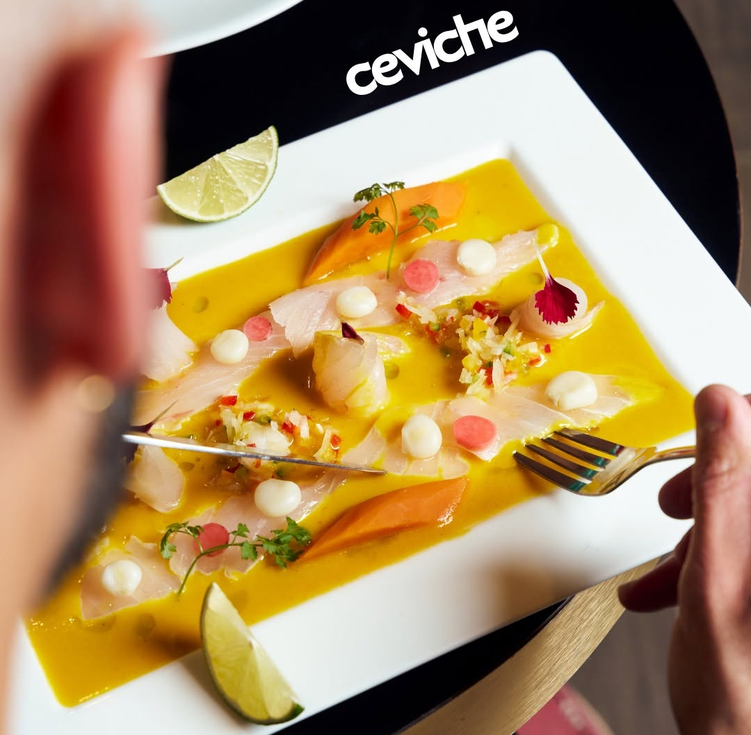
presented as a Peruvian sashimi, it consists of thin slices of raw fish (often tuna, salmon, or sea bass) drizzled with leche de tigre and carefully garnished. Unlike ceviche, the fish isn’t marinated for long: it is “cooked” by the acidity just before being served, retaining all its freshness and texture. The plating, meanwhile, draws on Japanese aesthetic precision: each slice is arranged with precision, and every garnish is measured to the gram.

Nikkei ceviche,

on the other hand, is a hybrid version of Peru’s national dish: to the traditional base (raw fish, red onion, chili pepper, lime), ponzu, wakame seaweed, sesame, and tobiko are added—all Japanese influences that enrich and refine the original dish without betraying it. This is perhaps the most accurate definition of Nikkei cuisine: not a betrayal of tradition, but its enrichment through cultural exchange.

Nikkei cuisine: a zesty tang, a lingering umami, and vibrant raw ingredients

At Manka: An Alsatian Take on Nikkei Cuisine

At Manka, Nikkei cuisine is reimagined through the lens of Khaled Alloucha’s artistic vision and the creative constraints of his region. The Manka rolls—variations on the classic maki—are the restaurant’s signature dish, blending Japanese rolling techniques with Peruvian flavors in creations unique to the establishment. The crudo y marinado highlights the freshness of the ingredients and the acidity of the marinade. The arroz misti evokes Lima’s Nikkei rice, a hybrid dish that blends Japanese rice-cooking techniques with the richness of Andean spices.

The menu isn’t limited to raw dishes: grilled meats affirm the cuisine’s Andean roots, reminding us that Peru is also a civilization of fire and embers, where the anticucho—a skewer of marinated beef heart—is as much a cultural monument as it is a dish. At Manka, this tradition of fire interacts with the lightness of the raw preparations, creating a meal in motion that never allows itself to be confined to a single tone.

At Manka, Nikkei cuisine isn’t just eaten—it’s experienced.

The experience is designed to engage all the senses simultaneously. First, the sense of smell—the aromas of fresh cilantro, squeezed lime, grated ginger, and roasted chili that waft from the plates are an invitation to travel long before the first bite. Next, sight—because Nikkei cuisine is also an art of plating, rooted in the Japanese aesthetic that turns every plate into a carefully crafted visual composition. The textures under the tongue—the crunch of cancha corn, the tenderness of raw fish, the consistency of vinegared rice, the lightness of an avocado mousse.
And then there’s what Nikkei cuisine does to our emotions: its ability to surprise, to challenge our expectations, to make an Alsatian diner who’s never set foot in Lima or Tokyo realize, suddenly, why these two cultures have found each other. Perhaps that is the miracle of Nikkei cuisine: conveying the story of a people and an encounter through a single bite. At Manka on Wilson Street, Khaled Alloucha carries on this miracle every evening.

Global Recognition Comes to Alsace

Nikkei cuisine is no longer just for the initiated. In Lima, Virgilio Martínez’s Central and Mitsuharu Tsumura’s Maido—both regularly ranked among the world’s best restaurants—have propelled this culinary tradition to the pinnacle of international recognition.

In Paris, Manko on Avenue Montaigne—recently renovated and now led by a new Peruvian chef trained across multiple continents—confirms that the French capital has fully embraced Nikkei cuisine. In Barcelona, London, and New York, Nikkei restaurants are popping up everywhere, attracting diners drawn to this cuisine that is at once accessible and sophisticated, fresh and complex, colorful and elegant.

Within this global landscape, Manka occupies a unique and valuable position: that of a restaurant bringing to the French provinces—and more specifically to Alsace—a cuisine that, until now, had largely been the preserve of major cities. That’s no small feat. In a sense, it is even a cultural statement: affirming that avant-garde gastronomy need not remain the exclusive domain of major capitals, but can flourish wherever men and women have the passion and courage to champion it.

In an era when global gastronomy tends toward homogenization, when the same trends circulate from city to city with the fluidity of social media, it’s heartening to find, just around a corner in Mulhouse, a restaurant that embodies a genuine worldview. Manka is not a trendy restaurant.

It is a restaurant that has something to say—about travel, about encounters, about how two cultures, by coming together on a plate, can create something greater than either one on its own.

Contact us

We have been unable to confirm your registration.
Your registration is confirmed.

Food and Good Newsletter

Contact us

We have been unable to confirm your registration.
Your registration is confirmed.

Food and Good Newsletter

Text & photo access request