

Post from 29 March 2026
What drives me is discovery...
I’ve always loved cooking.
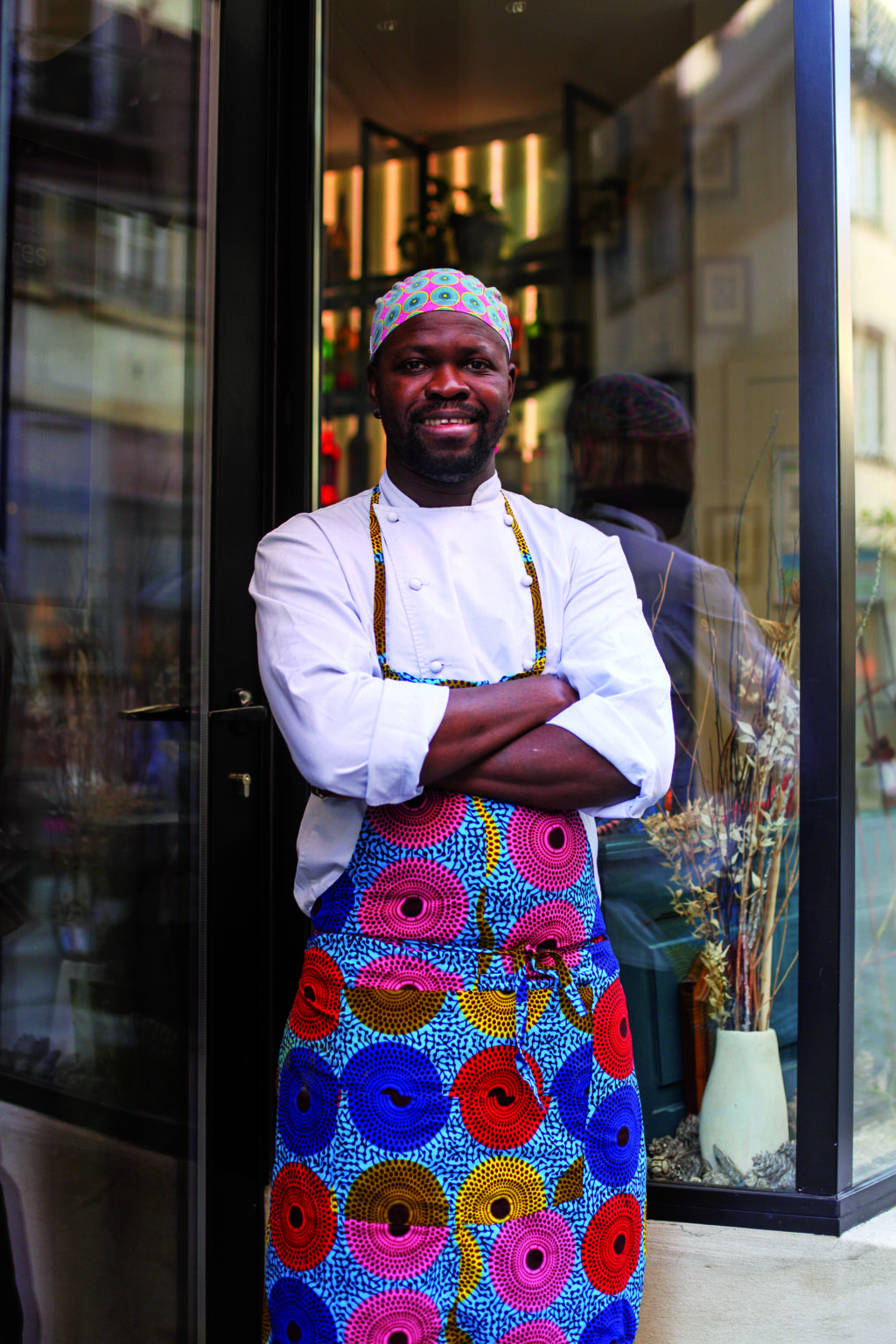
I grew up in Senegal, in a home where my mother cooked every day for the whole family. From a very young age, this sparked an interest in ingredients and a desire to cook. I come from a family of shepherds. We had vegetable gardens and animals. As a child, I raised pigeons, among other things. As a result, I learned very early on how to cut, gut, and prepare meat. So I had mastered all these skills long before my apprenticeship in France.
To please my father, I initially followed a more traditional path: a science-focused high school diploma, then college to study economics. But the call of the kitchen was stronger, so I eventually enrolled in a culinary arts program at Alexandre Dumas High School in Illkirch.
That’s where everything really took off. I then gained experience in one prestigious establishment after another, notably in Strasbourg, Monaco, and Saint-Jean-Cap-Ferrat.
I discovered rigor and high standards, the infinite potential of gastronomy, but above all, the four seasons! This diversity of climates and the resulting variety of products simply doesn’t exist in Senegal.
In France, Alsace is the place that made the biggest impression on me
And the people of Alsace! Behind their tough exteriors lie passionate, honorable, and hardworking individuals. Here, people are genuine; they speak their minds clearly, without pretense. That’s what allowed me to grow quickly, and I found myself reflecting their values in many ways.
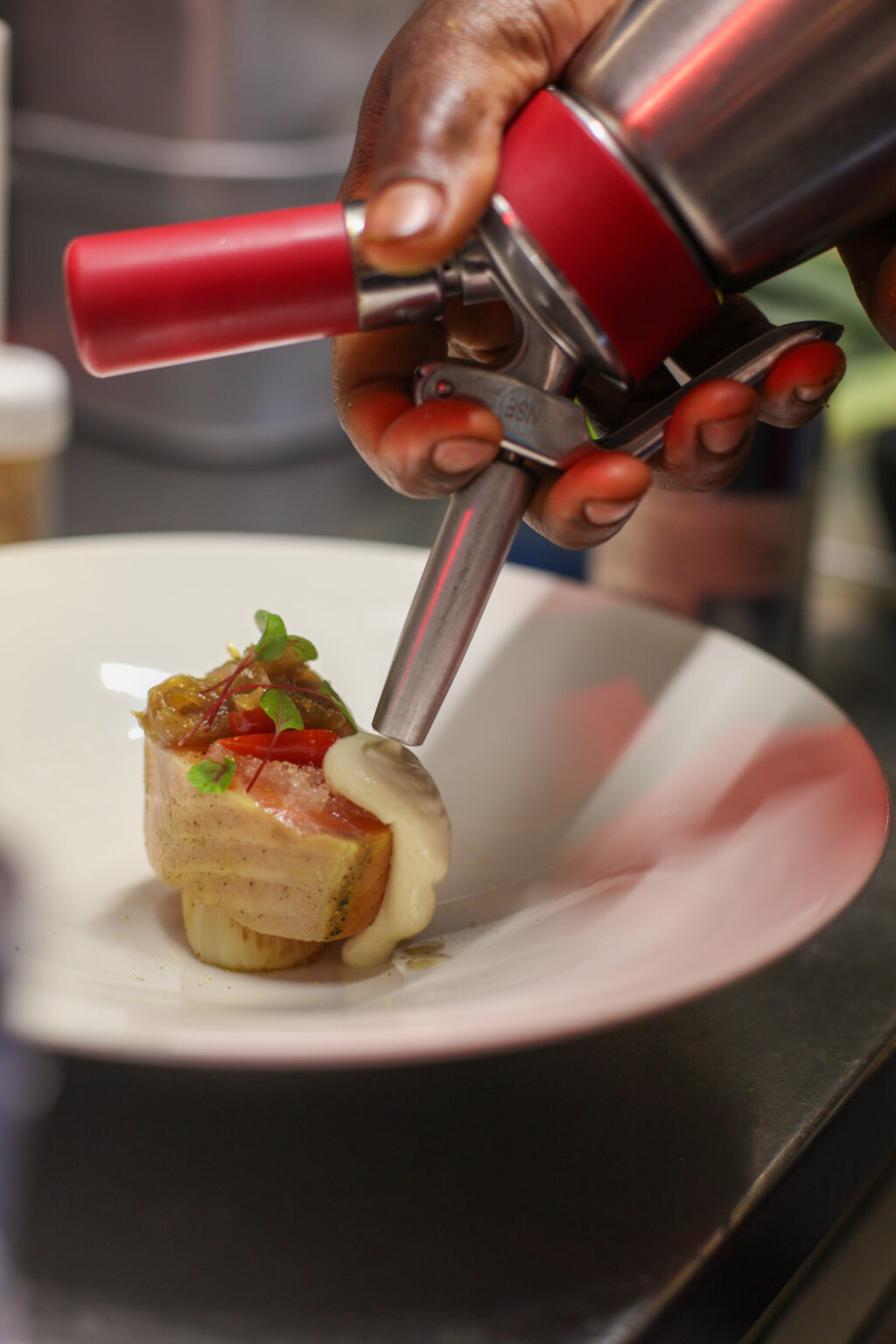
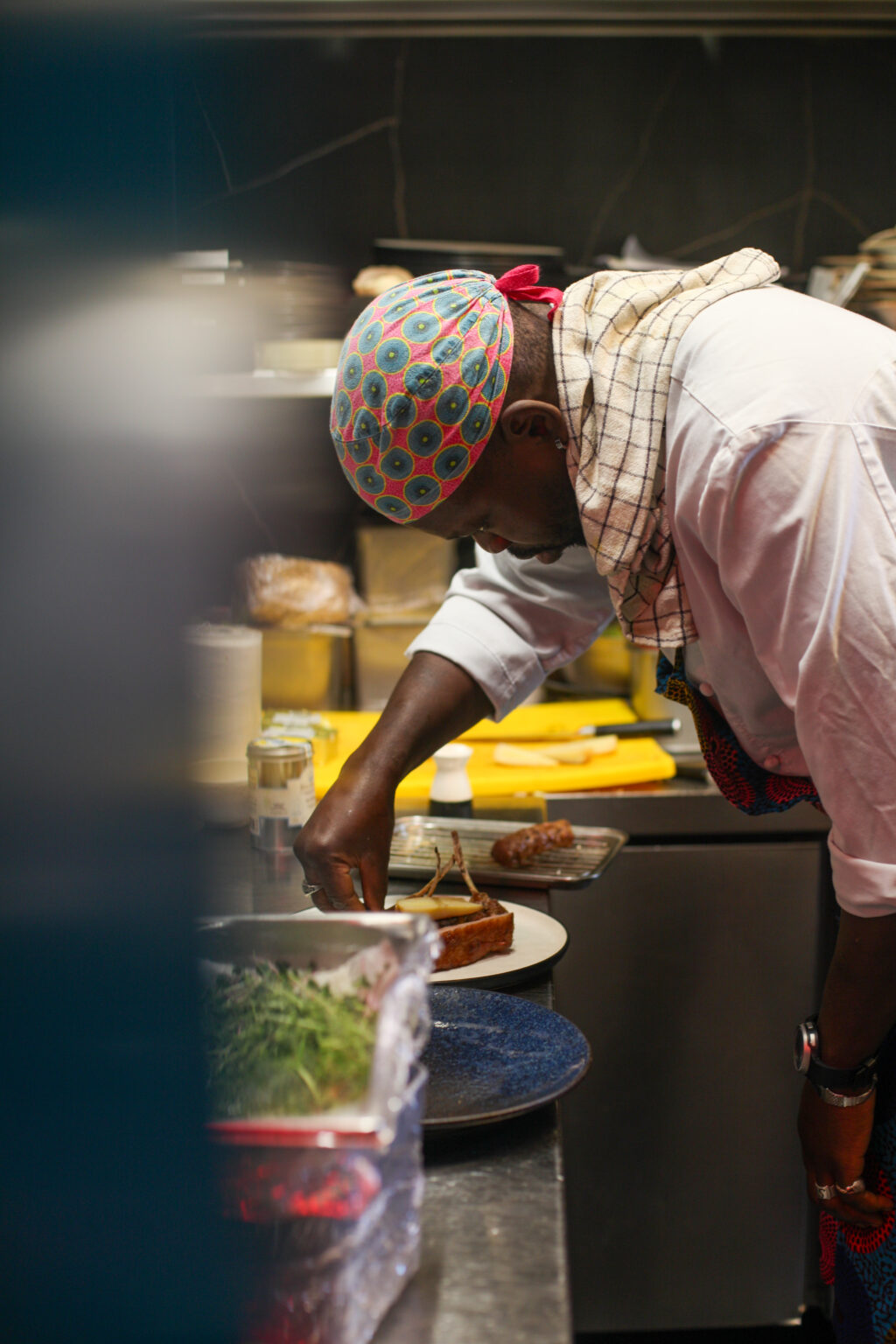
I define my cuisine as my identity: “Afro-fusion.” It features the flavors of Africa, but refined with a more subtle, visual approach, inherited from my European training.
As a source of inspiration, I found a beautiful echo of my roots in the sunny, warm cuisine of the southern Mediterranean. I also love Japanese culture and its particularly refined culinary techniques, which I was able to experience working with a Japanese chef at La Voile d’Or, and later, with Alsace’s first sushi master.
Senegal, Alsace, the South of France, Europe, Japan… it all comes together, layer by layer, on the foundation of my roots. Each dish tells a little of my story. African cuisine is often viewed negatively; I want to restore its reputation and show that it can be just as refined as any other.
I work with local farmers, a hunter from the Vosges, or directly at the fish market. Traceability is essential to me. In the spring, we have morels, asparagus, suckling lamb, certain game meats, and more. I’m comfortable with it all. I take just as much pleasure in working with meat as I do with fish and vegetables. Then, I pair these French local products with African spices and accompaniments: sweet potatoes, cassava leaves, chocolate, Tanzanian coffee, African tea, hibiscus…
These are often dried products that I can use year-round. For example, a chocolate sauce to enhance a meat dish, or suckling lamb served with thiéré—a Senegalese millet couscous that’s gluten-free and easier to digest than wheat.
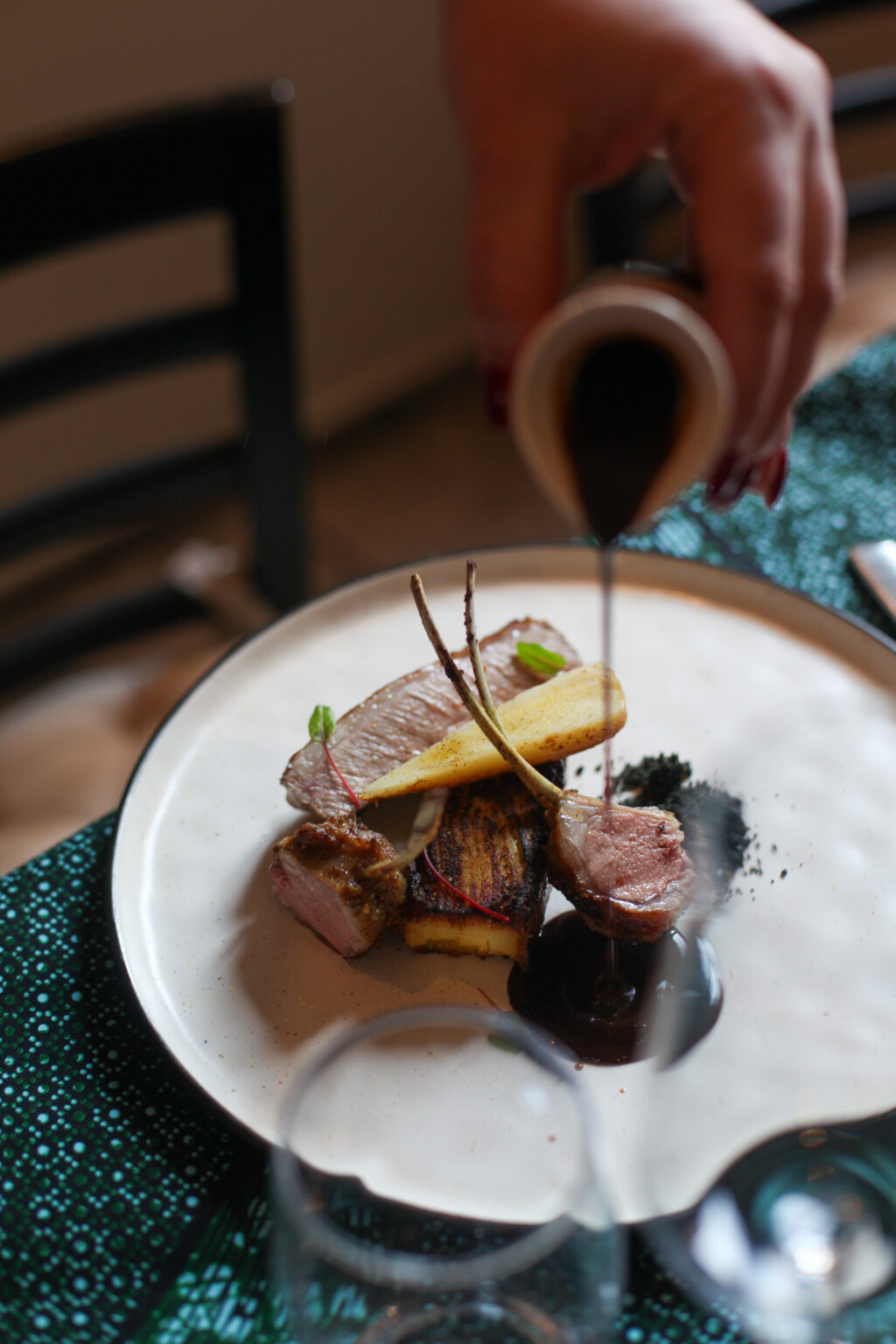
My goal: to offer a unique and healthy cuisine
Behind each of my dishes, my goal is to offer cuisine that is both unique and healthy. Eating well also means taking care of your physical and mental health. We know that food can do as much good as it can harm, and not all foods have the same nutritional value.
In Africa, we believe that the body is a temple—a vehicle that needs high-quality fuel to last. Before doctors, we are the first ones who can take care of ourselves, whether at home or in a restaurant. I like to believe that the menus I prepare provide my guests with a real boost of energy and vitality.
Moreover, in Senegal, cooking is intimately linked to spirituality. Nature is sacred. I strive to cook mindfully, without excess or unnecessary waste.
The whole fish I offer on the menu year-round is a concrete example of this: filleting the fish, using every part, hiding nothing and throwing nothing away—this helps reduce waste and conserve resources.
Cooking this way means refocusing, staying humble, and paying homage to the Earth and the people who produce our food.